Clean a sprinkler nozzle when debris is the likely problem and the nozzle is intact. Replace it when it is cracked or damaged, or when careful cleaning does not restore its spray. Before treating every poor pattern as a nozzle problem, compare it with other heads on the same zone: a zone-wide change points toward a broader supply or pressure condition rather than several unrelated clogged nozzles.
Read the spray pattern before taking a nozzle apart
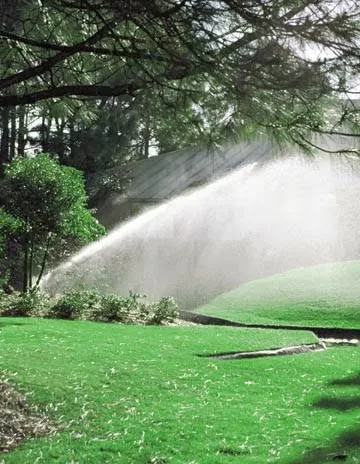
Watch the head while its zone runs and compare it with nearby heads that operate at the same time. A single head with a lopsided fan, interrupted stream, or spray that misses part of its normal arc is a reasonable place to inspect for a local obstruction. Dirt or small debris at the opening can interfere with the pattern, while visible damage can deform it.
The number of affected heads helps separate a local issue from a zone issue. If several heads in one zone are weak, replacing one nozzle at a time is unlikely to address the shared condition; water supply or pressure should be considered. Pooling around one sprinkler head is a different clue: water escaping at its base or body may indicate damage outside the nozzle, so a new nozzle alone may not solve it. These observations narrow the likely area to investigate, rather than proving a particular component has failed.
Clean removable nozzles without changing their shape
For a nozzle that can be removed from its sprinkler model, a gentle rinse and soft brush can clear loose grit. Turn the zone off before handling the head, and use the manufacturer’s method for removing the nozzle and any filter screen. Head designs differ, so the correct removal method and tool depend on the equipment rather than on a universal procedure.
Work through the parts in a way that preserves their original shape:
- Note the head’s position and the direction of its spray before disassembly, so you have a useful comparison after reassembly.
- Remove the nozzle and screen only as the head maker instructs; keep small pieces together rather than letting them collect dirt on the ground.
- Rinse off loose particles and brush gently. Do not push wire, a pin, or another sharp object through the opening, since enlarging or distorting it can change the spray.
- Reinstall the clean parts in their original arrangement, then restore the zone for a visual test.
This approach is intended for removable parts with surface debris. It does not correct a nozzle that has been physically altered, nor does it address a restriction elsewhere in the irrigation system.
Replace a nozzle when cleaning cannot restore it
A cracked, chipped, visibly bent, or otherwise damaged nozzle is a stronger replacement candidate than an intact nozzle whose pattern may be affected by another system condition. Replacement also makes sense when a careful rinse and brush leave a clear obstruction or the spray remains distorted at that individual head. The evidence is the nozzle’s condition and the result of cleaning, not merely the fact that its current spray is inconvenient.
Compatibility matters because a sprinkler head and nozzle work as a pair. Select a replacement intended for that head and for the desired arc, radius, and water output. A nozzle that throws farther or delivers water at a different rate can change how that part of the landscape is watered relative to nearby heads. Color coding and markings can help identify a product, but they are not universal across manufacturers; match the manufacturer and model information rather than assuming two similarly colored nozzles are interchangeable.
Changing the nozzle can also alter the pattern’s reach or shape, even when the replacement fits. Think about the area the head is meant to cover: a narrow strip, a corner, and an open lawn call for different spray coverage. The relevant replacement is the one compatible with the head and intended coverage, not simply the one that looks closest to the old nozzle.
Run the zone again and judge the repaired pattern
After cleaning or replacement, run the zone and compare the repaired head with its neighbors. Look for a consistent stream or fan, an arc that reaches the intended landscape area, and obvious gaps between watered areas. Also notice whether the spray is landing where it should rather than striking a walkway or hard surface. Make any arc or radius adjustment using the instructions for that sprinkler model; nozzle cleaning and spray adjustment are separate tasks.
The retest determines whether the work changed the symptom: a restored pattern at one head supports the local-nozzle diagnosis, while several still-weak heads call for looking beyond individual nozzles at the zone’s shared conditions. If the nozzle is clean and intact but the spray remains poor, repeatedly swapping similar parts is unlikely to clarify the cause. Readers looking for a local irrigation company can find Evergreen Irrigation in Louisville.