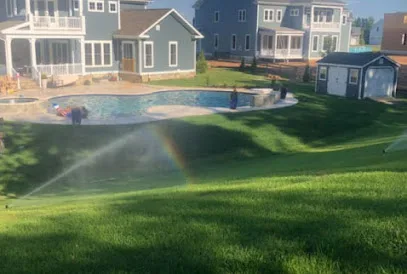
If your lawn sprinkler system is behaving like a checklist of small problems—mushy dry spots, a zone that never seems to fully pressurize, or heads that won’t pop evenly—it’s often not a “mystery” failure. In New England, the most expensive irrigation problems can start during the off-season when water is left in the system. That’s why homeowners in and around Holden, MA should plan winterization and spring startup as one continuous scope, not two unrelated appointments.
Start with the real scope: shutdown, water removal, and what gets verified
The Wilde Companies lists irrigation services that include lawn irrigation installation and maintenance, along with seasonal care such as winterization. Public info also highlights a winterization approach that includes shutting off water to the irrigation system, purging lines of water, and leaving the controller in an off position for winter months. When you call, your goal is to confirm the same sequence for your system: which shutoff will be used, how the lines will be cleared, and what will be documented after the visit.
For homeowners, the scope question matters because “winterized” can mean different things depending on whether the system uses manual drains, blowout, or another water-removal method. Hunter’s irrigation guidance similarly emphasizes that you need the residual water out of the system to minimize freeze damage risk to heads, valves, and lateral lines.
Confirm zone-to-valve-to-line coverage—so one missed section doesn’t ruin the season
During winterization, inconsistent coverage usually shows up later as symptoms that are easy to misread. If one area runs weak in spring or only a few heads activate on schedule, the root cause is often not the heads themselves—it can be a valve or line section that didn’t get the intended clearing and protection.
Ask the crew to explain how they confirm valve operation for each irrigation zone. You can also ask what they check for after shutdown: are heads sealed/positioned appropriately, are there signs of water remaining in lines, and is the controller left in a defined off state until restart?
Use your system details to get a more accurate quote
To keep pricing aligned with actual work, come prepared with your basics: number of zones, whether you have separate drip zones, and whether you notice any backflow-related concerns. If the quote bundles everything into one annual fee, ask for the line items to separate winter shutdown from spring start-up verification, and—if applicable—any water-safety testing that may be required for your setup.
Plan spring startup the same way: test the schedule and watch zone behavior
Winterization is only half the job. The “spring problem” homeowners notice—patchy coverage, random non-popping heads, or a zone that behaves differently than last year—can be caused by start-up that wasn’t treated like a real system test.
When you schedule spring startup, request that the technician verify that each zone responds correctly to controller commands. That means checking that valves open as expected, that sprinkler heads pop and retract properly, and that watering timing matches what you set on the controller. Even small controller issues can make the system look “fine” on paper while watering the wrong places.
Don’t ignore controller state and settings after the off-season
Public information for The Wilde Companies includes leaving the controller in an off position for winter months. In spring, confirm when settings will be reviewed versus simply re-enabled. If you run an older controller or one with unusual scheduling behavior, ask how the technician will handle programming so you’re not troubleshooting a “settings problem” while your sprinkler system is still being checked.
Why calling matters before temperatures drop: the address + contact you can use now
If you want to discuss your property’s winterization window and what scope will be performed, you can reach The Wilde Companies at +1 508-829-9453. Their public contact page lists the office at 1490 Main St, Holden, MA 01520, and their website is http://www.wildecompanies.com/. Use that call to align on the two-part plan: winter shutdown with water removal and a documented spring startup verification.
When you treat winterization and spring startup as one continuous sprinkler/irrigation scope—zone-by-zone, valve-by-valve—you reduce the odds that spring turns into repeat repairs. You also get clearer answers on exactly what was done, what was checked, and what should be watched next.