Yes, in many cases you can keep a sprinkler from watering the sidewalk without leaving a dry strip in the lawn. The key is to find out why water is reaching the pavement. A head aimed too broadly calls for a different correction than windblown spray or water running off the grass. Start by watching the system operate, then change only the part of the pattern that is causing the problem.
Tell overspray from wind or runoff
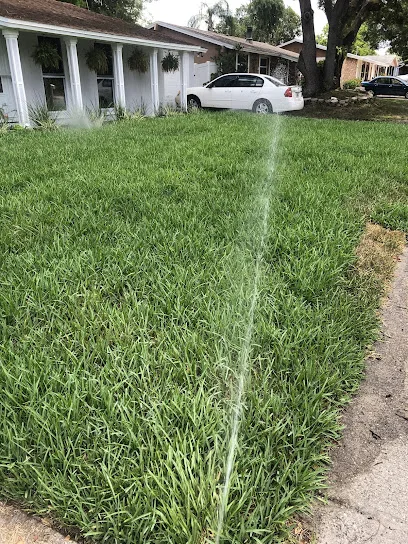
Watch the affected sprinkler while its zone runs, preferably when the air is relatively calm. If the same fan or stream crosses the sidewalk in a repeatable direction, the head’s aim, arc, or spray reach is the likely place to focus. If the water lands on the lawn first and later flows onto the pavement, the issue is runoff rather than a badly aimed nozzle. Droplets that drift in different directions from one moment to the next suggest wind is carrying them.
These patterns call for different responses. Adjusting a head may correct a consistent stream aimed over the sidewalk, but it will not stop water that is already traveling across the ground or reliably control wind drift. Look at where the water first lands, not just where the pavement becomes wet. That observation helps keep you from shortening a sprinkler’s reach when the real issue is how water is being applied or carried away.
| What you observe | Likely source | What to examine |
|---|---|---|
| A steady pattern crosses pavement | Head direction or pattern | Aim, arc, or radius controls |
| Water lands on grass, then flows | Runoff | Where water begins moving over the ground |
| Fine spray shifts in the air | Wind | Whether drift changes with conditions |
Match the adjustment to the head
A fixed spray head produces a stationary fan-shaped pattern. Depending on its design and nozzle, the direction, arc—the portion of the circle being watered—or radius may be adjustable. A rotating head, often called a rotor, sweeps a stream through a selected arc. Its adjustment points and method can differ from those on a fixed spray head, and one model’s procedure may not fit another.
Identify which kind of head you have and look for the markings or instructions intended for that model before making an adjustment. Use the controls provided rather than forcing the nozzle or head. After changing one setting, run the zone and observe where the spray lands. Making one change at a time helps you see whether the pattern moved as intended, instead of leaving you uncertain which adjustment altered the coverage.
Preserve coverage along the lawn edge
If the spray points across the sidewalk, correct the direction or arc first when those controls are available. Shortening the radius can also reduce overspray, but too much reduction may leave the outer lawn dry. The goal is not simply to make the wet patch smaller; it is to place water on the planted area while retaining useful coverage at the boundary.
Consider the shape of the area. A head beside a straight pavement edge may be able to cover the grass after a modest pattern adjustment. A narrow strip, corner, or curved border can be harder to serve with a broad fan or a single fixed position. If no available setting gives the planted area a suitable pattern, a nozzle with a more appropriate spray shape may be a better match than repeatedly narrowing the reach. The relevant test is whether the lawn edge remains within the wetted area after the sidewalk is no longer in the spray path.
Recognize when the head’s position is the constraint
Sometimes the problem is not a setting but the location from which the sprinkler must reach the landscape. A tree, shrub, edging, or a later change to the yard can block a path or divide one formerly simple area into separate targets. If the head has to send water through an awkward angle to reach around an obstacle, adjusting its arc may fix one side while reducing coverage on another.
In that situation, compare the head’s position with the whole area it is meant to serve, rather than focusing only on the wet sidewalk. A different spray pattern or a change in head placement may be needed when the existing location cannot reach the grass cleanly. St. Petersburg readers looking for a sprinkler-repair specialist can find Sunrise Irrigation at 2429 Central Ave Suite 206.