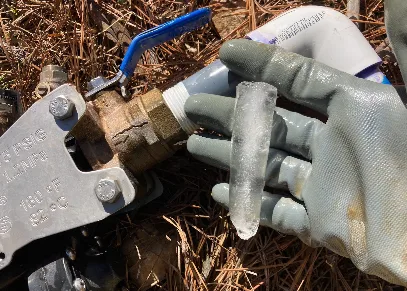
A spring sprinkler startup is a system check, not just a seasonal change to the timer. Restore water in a controlled way, verify the controller’s settings, and run each zone while watching what the heads and surrounding ground do. Only after the equipment is operating as intended should you choose a recurring schedule. This order separates problems with the system from decisions about how much to water the lawn and planted areas.
Restore water gradually and inspect visible equipment
Start by locating the irrigation supply and bringing water back slowly. A gradual opening lets the piping fill in a measured way rather than exposing an empty system to an abrupt rush of water. The aim at this stage is simply to restore supply and notice whether water appears where it should—not to assume that a quiet first moment means the whole system is sound.
Before asking the controller to run a full cycle, look over accessible pipes, valve areas, and connections. Check for water escaping at joints, a steady wet patch near a valve, or an unexpected flow at the surface. A little water left from the work area is different from a continuing leak; observe whether the area keeps getting wetter. If a leak is apparent, stop the test instead of continuing to pressurize a problem.
Also note visible damage that could affect a later test, such as a tilted head or a component that appears cracked. The point is not to diagnose every hidden part from above ground. It is to know what was already visible before the system starts and to avoid mistaking an existing defect for a controller setting.
Make the controller match the test
Check the controller’s displayed date and time, then inspect which program is active. A power interruption or a seasonal adjustment can leave the clock or program different from what you expect. If you begin testing while an automatic schedule is also running, it becomes harder to tell whether a zone is responding to your deliberate test or to an old programmed start time.
Use the controller’s manual operation or inspection function to run zones deliberately. A manual test lets you watch one area at a time and stop or move on when you have seen how it behaves. If several programs or start times are stored, focus on the active settings rather than assuming that a familiar display means last season’s schedule is still appropriate.
Walk each zone and read the pattern
Run one zone at a time and look at both the sprinkler heads and the ground they serve. Check whether heads rise and operate, whether spray reaches the intended lawn area, and whether water is collecting in one place. A head that does not spray, sprays in an unusual direction, or appears physically damaged is a different clue from a zone that runs but leaves a broad area dry.
Compare observations within the same zone. If one head is weak while nearby heads appear normal, the issue is localized around that head or its immediate water delivery. If several heads across the zone are weak together, the pattern points to a broader zone-level issue rather than one isolated spray opening. Persistent pooling can indicate that water is reaching the ground faster than that spot can absorb it, or that a head is directing too much water there; watch where the water originates before changing the schedule.
Keep a short zone-by-zone note while you walk: which area ran, which heads looked different, and where water collected or failed to reach. That record helps distinguish recurring patterns from a single moment of observation, and gives you a specific starting point if a repair is needed. Water Color Irrigation, Inc. is one local irrigation contact in Chattanooga.
Choose the recurring schedule only after the test
Different zones can serve different areas: a sunny lawn edge, a shaded section, and a bed of established plants do not necessarily need identical run times. A single duration copied across the whole irrigation system can therefore overwater one area while leaving another short.
Use the landscape’s current condition as the basis for settings rather than carrying forward last year’s program unchanged. Newly planted areas, established turf, soil that drains differently, and changing weather affect how quickly a zone needs another cycle. Where a patch stays wet after irrigation, extending runtime is unlikely to solve a coverage problem. Where a zone has clear dry areas, first use the observed head pattern to decide whether water is reaching them before simply adding minutes.