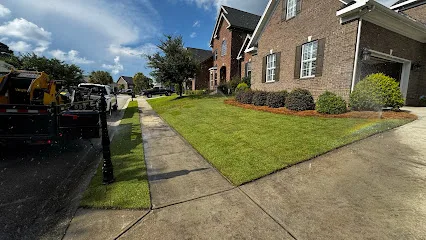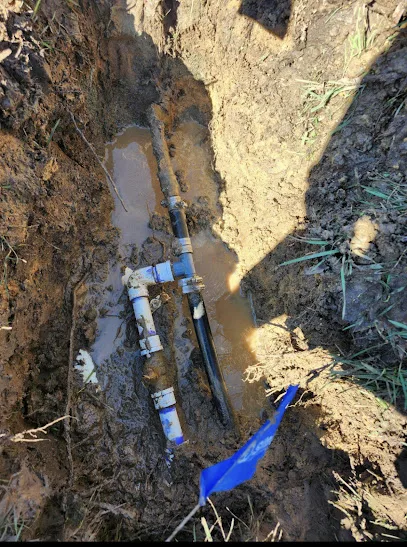
When one patch of lawn stays dry while nearby sprinklers are running, start by locating the patch in relation to the spray patterns. A narrow crescent beside a head points to a different problem than dry areas appearing across several parts of a zone. Then inspect the closest heads and compare the water reaching the dry and healthy grass. Those observations help distinguish a blocked or misdirected sprinkler from uneven distribution across the irrigation zone.
Read the shape of the dry area
Look at the boundary between dry and healthy turf and ask whether it follows the edge of a sprinkler’s reach. A crescent, strip, or wedge near one head can occur when its spray is blocked, aimed away from the patch, or unable to cover the intended distance. Note which heads appear responsible for watering that area rather than assuming the nearest one is the only source; overlapping spray patterns may contribute water from more than one direction.
A broader, irregular dry area that crosses several expected spray patterns suggests a distribution issue worth examining across the zone. The shape is a clue, not a diagnosis: soil, shade, and turf conditions can also make one part of a lawn look drier. For example, if a narrow strip lies just beyond a head while surrounding areas are green, inspect that head first. If separate dry spots occur beneath multiple heads, compare the zone as a whole before changing any single sprinkler.
Inspect the heads beside the dry patch
Run the relevant zone long enough to observe its pattern, then watch the heads around the affected grass. Note whether a head rises, whether its spray points toward the dry patch, and whether the pattern looks continuous or has an obvious gap. Grass, soil, or debris at the nozzle can interrupt the spray. A head that is tilted, damaged, or sitting low among nearby growth may also send water where it is not useful.
Keep the observation focused on what is visible. If one head does not rise or its spray is plainly obstructed, record which head and what it does; if several nearby heads behave differently, note that too. Avoid treating every weak-looking pattern as a reason to adjust the same way. A simple obstruction, a poor aim, a damaged head, and a problem affecting more of the zone are different findings, and the visible pattern helps narrow which one deserves attention.
Compare water across the zone
Visual impressions can be misleading, especially where spray overlaps. Identical straight-sided containers give you a direct comparison of how much water reaches different parts of the lawn. Place several at similar exposed positions across the zone, including one in the dry patch and one in a nearby healthy area. Run the zone for the same interval, then compare the collected water depths.
Use the containers as a relative test, not as a universal watering target. If the dry-area container collects much less than the others, water is being distributed unevenly at those test spots. If the amounts are similar, the difference in turf may relate more to local soil, shade, or grass conditions than to a missed spray pattern. Containers in only one corner cannot represent an entire zone, so include locations that cover both the suspected gap and areas that appear normal. Keeping the containers identical and level makes the comparison more useful.
Match the result to the likely fix
When the dry patch aligns with one head and inspection shows that its spray misses the area, correcting the aim or clearing an obstruction may address the specific gap. A visibly damaged head or one that cannot produce a usable pattern may need replacement. After a change, observe the zone again to see whether the spray reaches the intended patch rather than assuming that a changed setting solved it.
If the catch containers show low water in several locations, or multiple heads show weak or irregular patterns, investigate the shared zone distribution instead of repeatedly adjusting one sprinkler. Possible factors include pressure, flow, or the way the system’s layout distributes water; the pattern of findings helps determine which direction to examine. Simply extending the schedule may add water to areas already receiving enough while leaving the uneven pattern unresolved. If the containers collect similar amounts but the lawn remains patchy, turn attention to conditions at the turf and soil rather than continuing to alter sprinkler coverage. Greenville readers can also find Superior Irrigation Repair.