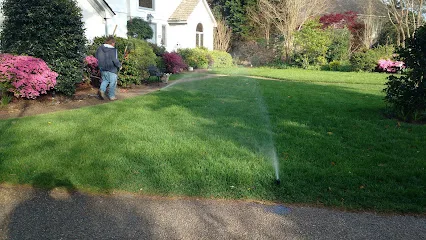
A poorly spraying sprinkler head is most often sorted out by watching its pattern and comparing it with nearby heads on the same zone. An irregular or weak pattern at just one head points toward a local nozzle obstruction or damaged part; a regular stream aimed away from the lawn points toward alignment. When several heads are weak together, look beyond one nozzle to a shared zone or water-supply condition. That distinction helps you choose what to inspect instead of taking parts apart at random.
Read the spray pattern before taking anything apart
Run the zone long enough to see a repeatable pattern, then observe the problem head from a safe distance. Note whether water is absent, weak, broken into uneven streams, escaping around the head body, or consistently landing outside its intended area. Also watch whether the head rises and retracts as expected. These are different symptoms, even if they all leave a dry patch or a wet sidewalk.
Compare the suspect head with nearby heads on the same zone. If only one has a distorted pattern while its neighbors look normal, the cause is more likely local to that head or nozzle. If several heads are uniformly weak, a single clogged nozzle is a poor explanation; the zone may have a broader supply or control issue. If several heads have normal spray but one is aimed at pavement, the difference is directional rather than a general lack of water. This comparison gives you a useful starting point before cleaning or adjusting anything.
Look for a nozzle obstruction when the pattern is irregular
A partial obstruction can interrupt part of a spray, split a stream, or reduce output at one head. If the spray shape is uneven and the other heads on the zone appear normal, inspect the nozzle and, where that head design includes one, its filter screen. Dirt or small debris at the opening can change how water leaves the head without changing the direction in which the head is set.
Turn the irrigation system off before removing a nozzle or screen. Rinse removable debris away with clean water, then put the parts back in their intended position. Avoid probing the nozzle opening with a hard or sharp object: the opening helps define the spray, and altering its shape can create a new distribution problem. After reassembly, run the zone again and compare the pattern with your original observation. A more even spray supports the obstruction diagnosis; a pattern that remains weak or distorted may point to wear or physical damage instead.
Treat a steady but misplaced spray as an alignment issue
When the spray is consistent but lands on a driveway, misses part of the lawn, or overshoots the area it should water, check the head’s direction and arc settings. Direction describes where the stream points; arc describes the portion of the circle it covers. A head that waters the wrong slice of ground can leave a dry edge while sending water where it is not useful, even though its nozzle is unobstructed.
Use the adjustment method intended for that particular head. A fixed-pattern spray nozzle, an adjustable spray head, and a rotating head may have different adjustment points, so one universal turn or tool is not appropriate. Make a small change, run the zone, and observe where the water lands before changing it again. The goal is to cover the intended planting or lawn area without directing spray onto nearby pavement or structures.
Replace damaged parts and match the replacement to the system
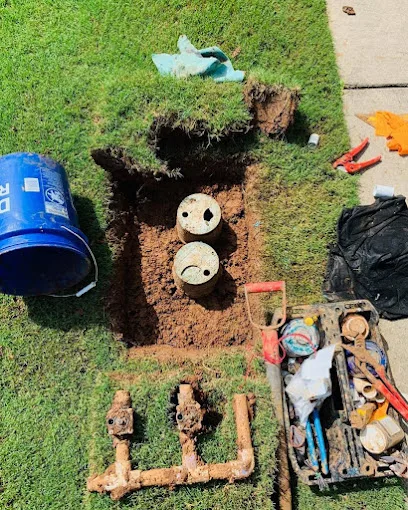
A cracked body, broken riser, missing component, or head that will not retract after its zone shuts off is a physical fault, not an aiming problem. Cleaning cannot restore a broken piece, and changing the arc will not repair a split body. Look at the head itself as well as the spray: water escaping around the body or a visibly damaged component gives a different clue from a clean, steady stream pointing in the wrong direction.
If replacement is needed, choose a head and nozzle that suit the zone rather than selecting by appearance alone. Neighboring heads need compatible spray patterns and water delivery so the area receives reasonably consistent coverage. A replacement with a different throw or output can create a new dry strip or overly wet spot even if the new part operates normally. Once the repair is complete, run the zone and check both the repaired head and the surrounding coverage. Virginia Beach readers can find Residential Specialties on its business page.