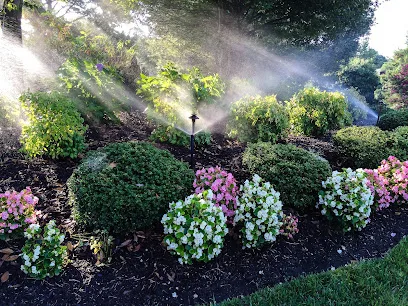
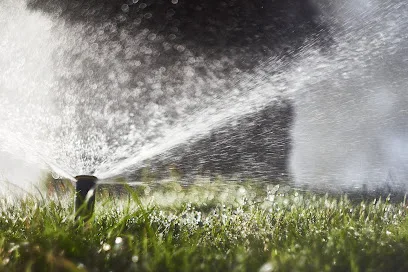
A sprinkler head that drips after a watering cycle is not automatically a sign of a failed part. Water left in sloped irrigation piping can drain toward a low head after the zone shuts off. The useful distinction is what happens next: a brief flow that dwindles at a low point fits drain-down, while ongoing water suggests that the zone is still being supplied or that water is escaping elsewhere.
A low head can release water left in the pipes
When a zone runs, its pipes fill with pressurized water. After the controller ends the cycle and the valve closes, water already in the pipe does not instantly disappear. If the line slopes across a yard, gravity can pull some of that remaining water toward a sprinkler head at a lower elevation. It may seep or briefly stream from the nozzle, then taper off as the line empties.
That pattern is often called low-head drainage. The head’s position matters: a head at a low spot is more likely to show the leftover water than another head higher on the same zone. The clue is not simply that the head is wet; it is that the release follows irrigation, is concentrated at a low point, and diminishes rather than continuing at a steady rate. Drain-down can leave a small wet area even when the sprinkler is no longer actively watering.
Use timing to separate a head problem from a valve problem
Notice whether the leak appears only while the zone is running, starts as the zone shuts off, or continues long after the cycle. A damaged or worn sprinkler head can leak during operation, when water is being delivered to it. Water that continues after the zone should be off raises a different question: is water still passing through the zone valve?
The controller sends the command to run a zone, but it does not physically block the water. The valve does that. If the controller is off and a head continues to receive water, the fault may be at the valve or another part of the water path rather than in the schedule. The timing helps narrow the possibilities; it does not identify the failed component by itself.
Follow the water to its exit point
Where the water emerges provides another useful clue. Water coming through the nozzle is different from water bubbling up beside the sprinkler body or spreading through the soil nearby. A leak around the casing can involve the head or its connection, while water surfacing away from the head may come from a buried irrigation line. Those possibilities call for different inspection than ordinary water draining out of a nozzle.
A quick sketch can preserve the leak’s location relative to the zone for later inspection:
- Location: Mark the affected head and wet area on the sketch.
These observations separate a single-head symptom from a zone-wide one. For example, if several heads continue to receive water after shutdown, the common valve or supply path becomes more relevant than replacing one nozzle. If only one head leaks while the zone runs and the rest operate normally, the trouble may be local to that head or its connection.
Persistent flow calls for diagnosis beyond the controller
A sprinkler head that keeps flowing after the system is off deserves attention because continued water can saturate the surrounding soil and waste water. Persistent flow calls for inspection of the water path, including the valve and the point where water appears; changing a program setting alone will not resolve a mechanical leak.
For readers in Birmingham, Blue Sky Rain Sprinkler Specialists and Landscape Lighting is one local business to look into for sprinkler repair information.