The right choice depends on the shape and planting of each area: fixed spray and rotating heads are sprinkler types, while drip irrigation is a separate delivery method that can suit planted beds. Fixed sprays fit compact spaces with clear edges, and rotating heads can cover broader lawn sections.
Know what the main head types do
A fixed spray head sends water across a set arc and radius. Because its pattern does not sweep back and forth, it can be useful for smaller areas where boundaries are easy to define. A quarter-circle pattern along a corner, for example, differs from a half-circle pattern beside a straight edge. The useful question is not simply how far the spray travels, but whether the wetted pattern matches the space without repeatedly reaching pavement or walls.
Rotating sprinkler heads move one or more streams across an area. That movement can serve a wider lawn panel than a compact fixed spray pattern, especially when the heads are positioned to cover a deliberate section of grass. Drip irrigation works differently: tubing and emitters release water near the plants rather than sending a broad spray through the air. It can be suited to planted beds where individual plants or rows matter more than covering open turf.
These categories describe delivery patterns, not a ranking from basic to best. A lawn, a border, and a bed have different targets.
Let boundaries and planting guide the choice
Start by tracing the area that actually needs water. A narrow strip between a walkway and lawn has little room for a wide arc; a spray pattern designed for a narrow space may keep more of its output within the planting area. A rotating stream that reaches beyond the strip can wet the hard surface without helping the grass. For a broad, open panel, rotating coverage may fit better if the stream can reach the intended lawn and avoid routinely hitting nearby structures.
Planting arrangement matters as much as geometry. A bed with plants spaced irregularly may be easier to serve with drip lines or emitters positioned near their root areas than with overhead spray aimed at the entire bed. A dense, continuous planting may call for a different layout than a few separated shrubs. In either case, the aim is to direct delivery toward the plants that need it while accounting for the bed’s edges and nearby lawn.
Why a suitable head can still perform poorly
A head that appears ideal on a plan may not work well when connected to a zone with unsuitable pressure or insufficient available flow. Pressure affects how a sprinkler throws water; flow is the amount of water available to the operating equipment. When operating conditions do not match what the selected head needs, its reach or distribution can fall short. The visible result may be dry patches, weak coverage, or water landing unevenly—not necessarily a defect in the head alone.
Application rate is another important distinction. Different sprinkler types can put water onto the ground at different rates. If equipment with unlike output is mixed on the same zone, one part of the area may receive more water during a run than another. A change from fixed sprays to rotating heads therefore involves the surrounding zone and its layout, not merely swapping one component.
Coverage also depends on placement and overlap. A head’s pattern must connect with the intended area and neighboring coverage; a product’s advertised radius by itself cannot show whether the installed arrangement is adequate. Existing pipes, spacing, and the other heads on that zone all affect the result.
Apply the comparison to a sample yard
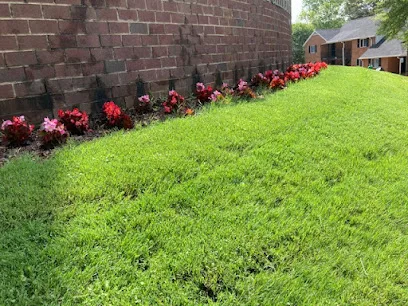
Imagine a yard with a broad grass panel, a narrow side strip, and a planted bed. Assess each area separately: rotating coverage could be considered for the open panel, a narrow-pattern spray for the strip, and drip tubing or emitters for the bed.
For local directory information about sprinkler repair, visit the Mobley Irrigation Landscape Construction, LLC page.