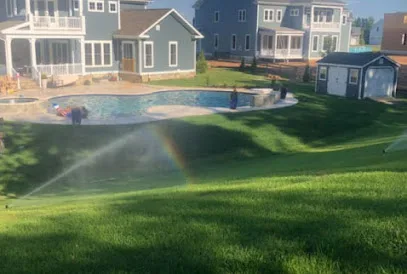
If your lawn irrigation starts acting “almost right” (a dry corner, a slow zone, or heads that pop inconsistently), the real problem is often that the repair request is too broad. For property owners in Stamford, CT, a better approach is to scope the job in terms contractors can map to hardware: which zone, what the valve is doing, how water moves through the system, and what you want to change about water use.
RK Irrigation, located at 130 Lenox Ave Ste 9 in Stamford, emphasizes installation, maintenance, and repair of complex irrigation systems, and it notes a team of technicians working in-house since 1985. Use that kind of detail to your advantage: ask for the scope to be explained as a sequence—zone → valve → distribution—rather than as a single vague “fix.”
Start with the symptom pattern: zone, valve, or head?
Before you call, take a few minutes to sort what you’re seeing into categories. This is the fastest way to keep the estimate aligned with the actual cause. For example:
Zone problem: only one area is off, while other zones run normally.
Valve problem: multiple heads on the same zone behave strangely, or the zone runs too briefly/too long.
Head or distribution problem: you see uneven spray patterns, misaligned coverage, pooling, or heads that don’t match their usual output.
Ask how your sprinkler system is diagnosed—without guessing
When you contact an irrigation contractor, you want a diagnostic run that confirms the cause instead of assuming it. A good scoping conversation typically includes questions like:
Which zone controller settings will be checked? (Run times, station behavior, and whether the controller matches what the technician is observing.)
What will be inspected at the valve box? (Wiring, valve operation, and signs that could explain inconsistent flow.)
How will coverage be verified? (You can request a walk-through of where water goes during operation, not just a discussion of replacement parts.)
Water-saving upgrades should connect to measurable changes
Many owners want the same end result—better lawn performance with less wasted water—but “water-saving” can mean different things depending on the system. In your discussion, frame the upgrade in measurable terms. For instance, ask how the plan addresses issues like:
Run-time efficiency: if a zone reaches coverage too slowly or too quickly, the controller and irrigation strategy may need adjustment.
Uniformity: mismatched head output can create dry patches in one area and runoff in another.
Delivery method: where appropriate, the contractor may discuss changes in how water is delivered (including drip irrigation concepts for certain beds or edges).
Plan ahead for the “paperwork” side of water management
Sprinkler and irrigation projects often intersect with local water-management concerns, and the details can affect the scope. Even if you’re only repairing one zone, ask what must be accounted for during the work—especially if there are concerns about water flow control and system protection. A good contractor should be able to explain what checks they perform and why they’re included.
For RK Irrigation in Stamford, you can start with the practical contact path: call +1 203-348-1621 or review details through http://www.rkirrigation.com/. Then, bring your symptom notes (which zone, what changed, and what you want to improve) and ask the technician to translate that into a clear scope.
Make your decision by matching the scope to your property constraints
The “best” repair or upgrade isn’t only about parts—it’s about fit. Before approving work, confirm that the plan matches your yard layout, the areas that must be prioritized, and the changes you’re willing to make. If the proposal is clear about zone-level causes and the steps to verify coverage and water use, you’re less likely to pay for work that misses the true problem.
When you scope sprinkler repair in Stamford this way, the conversation shifts from guessing to engineering the fix—helping you move from a frustrating symptom to a system that delivers reliable irrigation again.