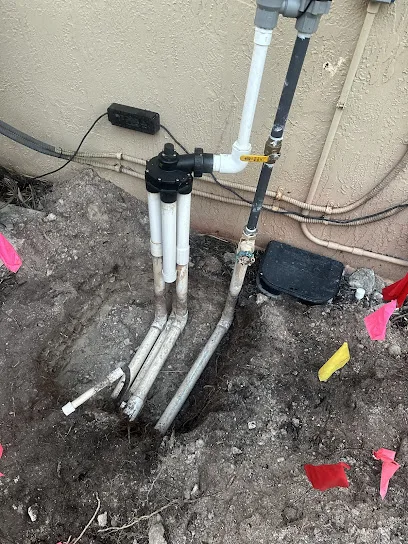
A sprinkler zone that appears to run after its cycle needs a simple first distinction: is water draining briefly from the system, or is the zone still being supplied? Watch the affected sprinkler heads after the scheduled run ends. A short release from low heads on sloped ground can be residual water; a steady or recurring stream is a different symptom. If flow continues, switch the irrigation controller off and observe what changes. That test helps separate a continuing electrical command from a valve that remains open.
Tell brief drainage from a zone that is still running
Water left in a lateral pipe can move toward lower sprinkler heads when a cycle ends, especially where the yard slopes. The discharge should taper off rather than continue as a sustained stream. Its location and duration are useful clues: a brief dribble at one or more low points differs from heads that keep spraying or a persistent wet area that grows after the controller has stopped its run.
Observe the zone long enough to see whether the water actually stops, rather than judging from a single glance as the cycle changes. Notice whether all heads in that zone are involved or only one low head. That distinction helps prevent treating normal drainage as a controller failure, while ongoing flow signals that water is still passing through the zone. If the flow is substantial and the irrigation shutoff is accessible, closing that supply can limit continued water loss while you work out the cause.
Use the controller-off test to split the diagnosis
With the affected area in view, switch the irrigation controller off. This is a diagnostic test, not a repair: it asks whether stopping the command also stops the water. Check the result at the sprinkler heads rather than relying only on the controller display.
- If the zone stops: look at the schedule and whether a manual station run or another active program could have kept it operating. Compare the displayed run with the zone that was actually watering; a schedule or manual start is a more relevant next lead than opening a valve.
- If the zone continues: the controller is no longer an adequate explanation for the ongoing flow. Focus attention on the valve that supplies that zone, because it may not be closing fully.
Make one change at a time if you find an active run or schedule setting. Then observe the zone again. Changing several schedules at once can obscure which setting was responsible and may create a different watering pattern than intended.
Narrow a valve problem by how many zones are affected
For a single zone that keeps flowing with the controller off, a mechanical sealing problem at its valve is a plausible cause. Debris caught where the valve closes or a damaged diaphragm can prevent a tight seal, allowing water through even when the controller is not calling for irrigation. A diaphragm is a flexible internal part that helps the valve open and close; the useful point for diagnosis is that a valve can pass water because it is not sealing, not because the run time is too long.
When several zones behave abnormally, apply the controller-off test to each one. If they stop, look for a shared schedule or control command; the controller can be keeping multiple valves open at once. If a zone continues after the controller is off, its valve may not be sealing, and more than one valve could be affected. This comparison matters because changing run times will not address a valve that keeps passing water without a command.
J Irrigation Repair is an irrigation repair specialist in Orlando.
Make the repair check observable and safe
After a repair or adjustment, run the affected zone briefly, switch it off, and watch the heads through the transition. The meaningful result is whether discharge ends rather than continuing after the cycle; a controller display that says “off” is not a substitute for checking the water at the zone. If water keeps flowing, record that result and the number of affected zones so the remaining fault can be narrowed instead of repeating schedule changes.
Keep the observation focused on the water behavior and controller settings. Do not handle wet or energized controller wiring. A concise note—zone identifier if known, whether controller-off stopped the flow, which heads discharged, and how long the water continued—gives a repair discussion practical information without turning an uncertain symptom into a guessed diagnosis.