A sprinkler backflow preventer is a protective assembly at the connection between a property’s water supply and its irrigation system. It is designed to limit reverse flow, so water from sprinkler piping does not travel back toward the drinking-water supply. You can look for obvious leaks or damage, but a visual inspection cannot tell you whether the assembly’s internal parts still perform correctly.
Why irrigation systems need a barrier against reverse flow
Water normally moves from the supply into the irrigation piping. Backflow describes movement in the opposite direction through that connection. A change in pressure can make reverse flow possible: for example, a drop in pressure on the supply side may draw water from connected piping, while pressure on the irrigation side can push water toward the supply. The preventer is there to interrupt that pathway.
That separation matters because sprinkler piping serves outdoor areas. Soil, lawn treatments, and other material around irrigation components can introduce contaminants into water in the system. If water can move backward through an unprotected connection, those materials could threaten the water used indoors. The backflow assembly addresses that plumbing risk; it does not filter or disinfect water throughout the irrigation network.
Think of the device as a safeguard at a particular connection, not as a controller for the entire lawn system. It does not set watering times, open zone valves, or determine how much water sprinkler heads apply. Its job is tied to the direction of flow between the supply and the irrigation piping.
Find the assembly without confusing it with sprinkler controls
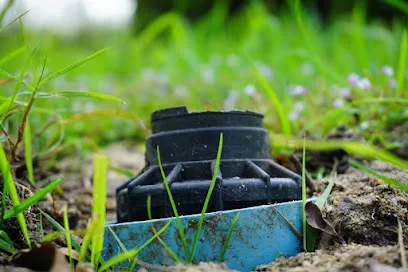
Begin where the irrigation piping branches from the property’s water supply. The backflow assembly is commonly located near that connection, though the exact position depends on the property’s plumbing layout. It may be visible above ground, often as a compact arrangement of pipes and fittings, or located in a less prominent spot along the supply route.
Several other parts of a sprinkler system can look like likely candidates but have different jobs. A controller is the electronic unit that schedules watering. Zone valves direct water to separate parts of the lawn, and a valve box may cover those valves below ground. The backflow preventer is associated with the supply connection rather than with a particular watering zone. Following the piping from the supply can help distinguish the components without relying on a label or shape alone.
Say you find a small box near a group of sprinkler heads. Its location might suggest a valve enclosure, but the box itself does not identify what is inside. Trace the system’s layout: a component among zone lines distributes water for irrigation, while the protective assembly belongs at the point where the irrigation supply connects to the property plumbing.
Read visible symptoms as reasons to inspect
Persistent dripping, a puddle that returns around the assembly, cracked fittings, or a component that appears displaced are observable reasons to have the device examined. A damp patch immediately after irrigation or rain is less conclusive than water that continues to appear when the system is not running. Watching whether moisture returns can help you describe the issue clearly.
A leak identifies a condition that needs attention, but not the failed internal part or the cause. The assembly contains working components that are not fully visible from outside, so replacing a piece based only on where water appears can misidentify the problem. Avoid forcing or adjusting parts simply to stop a leak; their positions and operation are part of the protective assembly.
For example, if a fitting is visibly cracked, the external damage itself is a meaningful observation. If the surrounding ground is only wet, note when you first saw it and whether the sprinkler system had recently operated. Those details distinguish an observed symptom from a guess about what failed.
Know what a functional test adds
A visual check can reveal external condition, but it cannot establish that internal protective components work correctly under pressure. A functional test uses appropriate testing equipment to assess the assembly’s performance. The result answers a different question from “Does it look intact?”: it evaluates whether the device is operating as intended during the test.
If a test is due or performance is uncertain, check with the local water provider about any applicable schedule and use a qualified tester for the assembly. Testing requirements and procedures can depend on the local authority and the device installed, so do not assume that a homeowner’s visual check substitutes for a required measurement-based test.
Local readers can also look into Nashville Irrigation & Lighting, LLC.